Storm Damage Roof Repair in Burlington, NC: What to Do After a Hail or Wind Event
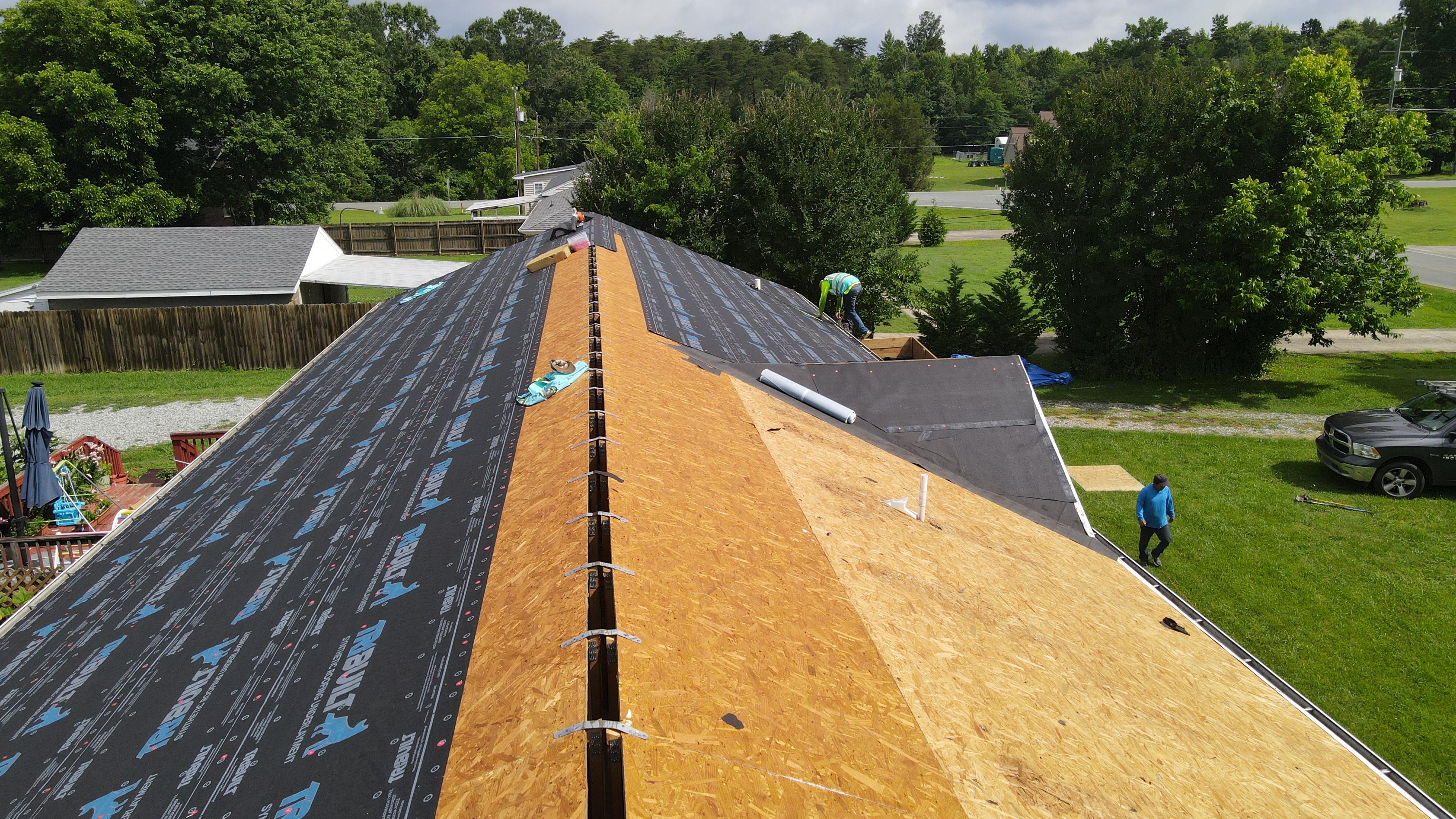
After a Storm: First Steps for Burlington Homeowners
Alamance County sits squarely in the NC Piedmont's severe weather corridor. Spring and early summer bring fast-moving squall lines, isolated supercells, and the occasional storm that drops quarter-size hail on Burlington neighborhoods before anyone has had time to check a radar app. When that happens, the 24–48 hours after the storm are the window that matters most.
Do this immediately:
- Stay off the roof. Wet decking, hidden punctures, and structural instability make post-storm roofs dangerous — even when the damage looks minor from the ground.
- Document everything before cleanup. Walk the property, photograph broken gutters, displaced shingles, dents in AC units, and any debris impact. Time-stamped photos are the backbone of an insurance claim.
- Check your attic. Active leaks show up there first. Water stains on decking or insulation, daylight through the sheathing, or wet rafters all confirm a breach.
- Call a licensed local contractor for an inspection — not a door-to-door solicitor who showed up the morning after the storm.
Important: Do not authorize permanent repairs before your insurance adjuster inspects the damage. Starting work early can jeopardize your claim. Emergency tarping is fine — and expected — but hold off on anything structural.
Common Storm Damage Types in Burlington, NC
Hail Damage
Burlington and the rest of Alamance County average several significant hail events per year, concentrated in the March–June window when Gulf moisture collides with cold fronts over the Piedmont. Quarter-size and larger hail is common enough that insurance adjusters in this region know exactly what to look for.
Each hail impact fractures the granule coating on an asphalt shingle and leaves a bruised, softened spot on the asphalt mat underneath. Over time — sometimes within a single season — those impact points become water infiltration points. The granules that wash off accelerate UV degradation on the exposed mat.
What a trained inspector finds on a hail-hit Burlington roof:
- Granule loss concentrated in circular patterns, often visible in gutters as heavy granule buildup after the storm
- Soft-spot bruising on the shingle mat — detectable by touch, not by eye from the ground
- Dents in metal flashing, step flashing along dormers, and metal valley trim — these are the clearest physical evidence and often what adjusters use to confirm the event date
- Cracked or shattered shingles where large stones hit brittle older material
The most important thing to understand: hail damage is largely invisible from ground level. A roof that looks intact from your driveway can have hundreds of compromised shingles. If Burlington experienced a documented hail event and your home was in the path, schedule an inspection — don't wait for interior leaks to confirm it.
Wind Damage
The severe thunderstorms that track through Alamance County routinely produce wind gusts in the 50–70 mph range. At those speeds, shingles that are even slightly past their bond age lift, crack the adhesive strip, and either blow off entirely or re-seat in a misaligned position that leaves them functionally unsealed.
What wind damage looks like:
- Lifted or missing shingles — gaps visible from the ground, or shingles found in your yard and neighbors' yards
- Ridge cap damage — the cap shingles along the peak take the worst of high winds and are often the first to go; a missing ridge cap exposes the decking seam directly to rain
- Compromised step and counter flashing — wind pressure can break the seal or peel flashing away from dormers, chimneys, and walls, creating leak paths that don't show up until the next rain
- Lifted shingles that re-seated — these look fine but are no longer bonded; they'll blow off in the next storm and allow water intrusion in the meantime
Fallen Trees and Debris
Burlington's older neighborhoods have mature hardwoods that add real character — and real risk. A storm that saturates the soil and drives 60 mph winds at the same time creates prime conditions for root failure. Even a tree that stands can lose a major limb across a roofline.
A direct tree or large limb impact typically means:
- Broken or crushed decking — OSB or plywood sheathing cracks under point loads; structural rafters below may be fractured
- Immediate need for emergency tarping — any breach in the deck needs to be covered within hours to prevent water from soaking insulation, drywall, and framing below
- Structural inspection before repairs begin — a contractor needs to assess rafter integrity before laying new decking; hidden rafter damage that gets shingled over becomes a much bigger problem later
Tree impacts are almost always a full insurance claim. Document the scene in full before any debris removal begins.
Repair vs. Replace After Storm Damage
Not every storm-damaged roof needs a full replacement. The honest answer depends on several factors:
- Age of the roof. An asphalt roof over 18–20 years old that takes significant hail damage is usually better replaced than patched. The undamaged shingles are already approaching end of life; insurance often pays to replace the whole slope.
- Percentage of damaged area. When 25–30% or more of a roof slope shows measurable hail impact or wind damage, a full replacement of that section is typically more cost-effective and more watertight than a patch.
- Multiple penetrations. A tree impact or large debris strike that punches through the deck in more than one location means extensive decking replacement — at that point, a full re-roof is usually the cleaner path.
- Prior repair history. If the same sections have been repaired before, layering another repair on an aging system is a short-term fix that insurance may not cover again.
A good local contractor will tell you honestly where the threshold is for your specific roof — not default to full replacement on every storm call.
Filing a Homeowner's Insurance Claim in NC
North Carolina homeowner's insurance covers sudden storm damage — hail, wind, fallen trees. It does not cover gradual deterioration, deferred maintenance, or damage that predates the storm event. The distinction matters, and adjusters are trained to tell the difference.
Step-by-step for Burlington homeowners:
- Document damage thoroughly before any cleanup or temporary repairs (see above)
- Call your carrier and open a claim — do it within 24–48 hours of the event while storm records are fresh
- Get a contractor's inspection report before or concurrent with the adjuster visit; having your own documented scope helps if the adjuster's assessment is incomplete
- Walk the roof with the adjuster or have your contractor present — adjusters can miss damage on complex rooflines, and a contractor who knows what to look for can flag items in real time
- Review the adjuster's scope carefully — if line items are missing, ask your contractor to help file a supplemental claim for the overlooked damage before repairs begin
- Coordinate contractor start date with the claim approval and material lead times
NC law: Any contractor who offers to waive or absorb your deductible is committing insurance fraud under NC General Statute 58-3-168. This offer voids the legitimacy of the entire arrangement — walk away from any contractor who makes it.
Standard NC homeowner's policies carry a wind/hail deductible of 1–2% of insured value. On a $350,000 Burlington home, that's $3,500–$7,000 out of pocket. If the repair estimate is close to your deductible, run the math before filing — a claim that doesn't pay out still counts against your policy history.
Avoiding Storm Chasers in Burlington
After any significant storm in Alamance County, Burlington neighborhoods see an uptick in door-to-door solicitation from out-of-area roofing contractors. Some are legitimate companies expanding their geographic reach. Many are not.
Red flags to watch for:
- Door-to-door canvassing within 24–48 hours of the storm — legitimate local contractors have existing customers to serve; the ones who appear immediately are working storm patterns, not building local relationships
- Requests for upfront payment or a large deposit before materials are ordered — a standard deposit is reasonable, but full or majority payment before work starts is a warning sign
- No verifiable NC contractor license — any roofing contractor doing work over $30,000 in NC must hold a general contractor's license. Ask for the license number and verify it at nclbgc.org
- Out-of-state license plates and a temporary local address — if a company can't give you a real local address and a phone number that connects to an actual office, you have no recourse if something goes wrong
- Pressure tactics — "we only have one crew available and we need an answer today" is a sales technique, not a service reality
Verify any contractor you're considering through the NC Licensing Board for General Contractors before signing anything.
Get a Free Storm Damage Inspection in Burlington, NC
If your Burlington home was in the path of a recent hail or wind event, a professional inspection is the right first step — even if you can't see obvious damage from the ground. Waiting for interior leaks to confirm roof damage means waiting until the repair is more expensive and the insurance window has closed.
Silverback Roofing serves Burlington, Graham, Mebane, and all of Alamance County with free storm damage inspections. We document the full scope, work directly with your insurance adjuster, and give you a straight assessment of what the roof actually needs — repair, partial replacement, or full replacement — with the evidence to back it up.